Showing posts with label thinky. Show all posts

Saturday, December 10, 2011

Selections from Occupy Seattle Weekly Issues 1 & 2


Issue 1, 11.5.11 - While We’re Giving Banks a Hard Time, Let’s Think of the Little Guy

Since demonstrations and actions against unjust and destructive financial institutions will continue into the near future, I feel it’s important to do something nice for all the 99%ers that happen work at those places.  There are a lot of lower level bank employees caught up in the crossfire between the Occupy movement and Chase/BofA/etc. upper management. 

I’m making it my mission to bring flowers and a condolences card (sorry about your bosses destroying the economy, we know you’re the 99% but sadly your bosses aren’t) to at least one Chase bank location on Capitol Hill before Black Friday.  Maybe I’ll add a little note about how it sucks to live in a world where we all have to live with the consequences by some ill-considered risks taken with other people’s money.

What’s not to love about an action like this? It’s inexpensive, dispersed, easy to recreate and propagate, doable with groups to 1 to however many can fit in a bank, not likely to bother the SPD, (hopefully) genuine enough to apologize to our fellow 99%ers, and quirky and whimsical enough to want to post to Facebook. If you think I’m right about this, then go out and do it, post it to the internet and tell all your friends.

Issue 2, 11.13.11 - A Question of Numbers

The Seattle PI sez; “The city’s price tag to monitor the entrenched Occupy Seattle protest ballooned to $529,609 this week, which includes last week’s pepper-spraying and arrests of protesters in Capitol Hill.” Occupy Seattle organizer Jesse Mulert sez right back: “How is it that that 50-300 peacefully assembled citizens warrant such a concentration of resources?” (Seattle PI). You have to wonder how OS got pinned with a half a million dollar bill that’s largely for police time. It’s almost as if the City of Seattle thinks the problems reported in and around camp didn’t exist before Occupy Seattle showed up. 

Will Capitol Hill and the City of Seattle suddenly be free of fights, drug use, vandalism and encampments of the un-housed if Occupy Seattle disbands? Maybe the concentration of those particular issues will decrease on that block, but they won’t really go away – they’ll just spread out through the city and the neighborhood again. It feels a little like the City is blaming the victim. For what are these things but symptoms of an economically unjust society and a massive wealth gap? The 99% didn’t create the disease, but it sure can get blamed for it.

Also: Who caused the Great Recession that tightened the city and the police department’s budget? The banks and financial firms whose actions led to the mortgage crisis. This cascade of economic disaster eventually led to the creation of the Occupy movement.  Why isn’t the city challenging these banks with this half a million dollar bill?


Tuesday, March 8, 2011

Save Evans: A Plea to Preserve the Independent Status of the Evans School of Public Affairs

I wrote the letter below because the Evans School of Public Affairs at the University of Washington might lose its independent status and be consolidated with another (unnamed) school. UW President Phyllis Wise wrote in a letter to Washington state legislators on February 23rd that the consolidation of the Evans School was one of the options being considered in the face of $190-250 cuts in state funding to UW. There's more on why this is a terrible idea in the letter, but basically, consolidation would destroy an excellent public affairs school in order to save an amount of money that's exactly piss compared to the budget cuts that UW is facing.

This matters a great deal to me because I'm an Evans student. I think that training cohorts of clever
and dedicated people to be servants of the public good (as the Evans School does so well) is a very important and worthwhile undertaking. There is a painful irony that during a nationwide governmental budget crisis of epic proportions, a school might be destroyed that is training people to deal with problems just like epic governmental budget crises.
====


March 8th, 2011

Interim President Phyllis Wise
Provost Mary Lindstrom
University of Washington

Dear President Wise and Provost Lindstrom,

The last thing I thought I’d hear when I started at the Evans School of Public Affairs was that the President of the University would consider doing away with our status as an independent school. The economic environment being what it was, harsh budget cuts from the state legislature were bound to be on the horizon. I expected that the Evans School would get their share of tough financial decisions along with everyone else. However, I never thought that an option as drastic as consolidation would be on the table.

After all, the cohort starting in 2010 was the largest and most competitive in the school’s history, and the Evans School ranks fifth in the US News World & Report’s listing of best schools of Public Affairs among programs in public universities. Evans School students can be found everywhere in the public and nonprofit sectors in Washington, making the Evans School of Public Affairs a name synonymous with quality public policy work throughout the state. This was, in fact, the reason I chose to apply to the Evans School of Public Affairs. Evans graduates are everywhere in Seattle, talking about the quality education they received in the program and doing the sort of work I’d like to have a career doing.

Knowing all this, it pains me that you would consider “consolidating the Evans School of Public Affairs with another college and significantly reduc[ing] course offerings” as an acceptable course of action. The grand total in financial savings of this plan would be a mere $700,000, the amount of state funding that the Evans School receives that does not go to tenured faculty. A budget reduction of less than 1% of the total cuts that the University of Washington is facing is a pittance compared to the damage that would be done by eliminating the educational quality and high-grade academic brand of the Evans School of Public Affairs. I hope that you take this into consideration as you move forward with budget decisions, and choose to make cuts that will preserve the independence of the Evans School.

Sincerely,

Jennifer Power
Masters of Public Administration candidate, 2012
Evans School of Public Affairs

Wednesday, February 23, 2011

2/26 - More cheap fun: Saturday University @ Seattle Asian Art Museum and Yoga in Volunteer Park

Saturday University: World Little Known
Central Asia, its Histories and Place in Today's World

The Silk Roads: Central Asia in the Wider World
February 26th - 9:30am-11am
Prof. Daniel Waugh, University of Washington
Seattle Asian Art Museum (Volunteer Park), Stimson Auditorium

Central Asia played a crucial role in cultural and economic exchange across Eurasia along the many routes that made up the historic "Silk Road."

Come early to stretch! Yoga classes offered by 8 Limbs Yoga at 8:30 am (beginners welcome); pay by voluntary donation. Please bring your own mats.

==
From Silk Road travel to contemporary social and political challenges in post-Soviet republics, this series investigates the region from Uzbekistan to Mongolia. Cosponsored by the University of Washington Jackson School of International Studies, University of Washington. Teacher clock hours available.

Other lectures in this series:
Mar 5: Crafting Culture in Soviet Central Asia: Writers, Actors and Ordinary People
Mar 12: Religious Pluralism of Central Asia
Mar 19, Part 1: Central Asian Nomads Today: Musical Storytelling
Mar 19, Part 2: Esoteric Buddhism in Japan: The Lineage of Shingon
Mar 26: Colorful Ikat Textile Design and Central Asian Aesthetics
Apr 2: Women’s Work in Central Asia: Past and Present
Apr 9: Struggles of Central Asia Since Independence
Apr 16: Creating Community Solutions to Rural Issues in Central Asia

Questions? Email Gardner Center for Asian Art and Ideas: gardnercenter@seattleartmuseum.org

Tickets
(buy them here! by phone: 206-654-3121 or email: boxoffice@seattleartmuseum.org)
Series
Members: $40.00
Adults: $80.00

Individual Lecture
Members: $5.00
Adults: $10.00

Saturday, November 27, 2010

Thankfulness

On and right before Thanksgiving, I got some very sweet texts from good friends of mine about how thankful they were to have me in their lives. Right back at you, guys. I was struck by the trend, at least in my little friend circle of Seattle 20-somethings, of seeing Thanksgiving as a day to be thankful and express gratitude for the good things in one's own life. It made me happy and made me think about all the things I'm grateful to have in my life, which in turn made me happier.

Even if my faithful readers didn't have the chance or time to be thankful on Thanksgiving, I hope that you will at some point (or at several points!) during the holiday season. My bet is that it will give you a breath of space and happiness in this midst of the next month's short days and busy schedules - that's what it did for me, anyway.

Saturday, September 12, 2009

Good times at the Broadway Design Charette

I know it sounds weird to say that a four-hour community meeting was tons of fun, but I had a really good time at the Broadway Design Charette this afternoon. Everybody, and I mean everybody, was there and there was a lot of excitement and energy going around. It helped that Seattle University's new Admissions and Alumni Building is spacious, light-filled and lovely. Also, there were tasty snacks :D

The whole write-up will go up on CHS blog soon enough, but there was some consensus around the community benefits that were most desired. Community meeting space, Nagle St. as a green pedestrian corridor, artist live/work or performance space and affordable housing were all quite popular as possible features in a transit-oriented development over the light rail station.

Wednesday, July 22, 2009

Referendum 1 - Bag Fee Fun

The debate on the bag fee has been going around the city for a while now, mostly prodded on by the Seattle Green Bag Campaign's appearances at big events like the Solstice Parade with their infamous mascot, the Bag Monster. On one side: eco-studs, the ever feisty People for Puget Sound and the Seattle City Council. On the other: 7-11 Inc., the American Chemistry Council (whose members include Dow Chemical and ExxonMobil), people who like using plastic bags to pick up dog doo, and those who think yet another nanny-state style fee is stupid.

Even with a line-up like this, a lean, green writing machine like myself has to sit back and think - would this fee really do what it's supposed to do, or will it be yet another token attempt at sustainability?

The thing that's been tipping the issue for me has been the bag fee's opposition. Namely, the the amount of money the American Chemistry Council has been willing to pour into opposing a fee that is sponsored by the itty-bitty Seattle Green Bag Campaign and their wee $65,000 fundraised thus far. The ACC threw in $500,000 last Friday, bringing their anti-bag fee contributions to a grand total of $740,000.

What this suggests to me is that the ACC sees the bigger picture. Even if the projected 70% drop in bag use by Seattle residents isn't enough to bother them, something else is. Maybe it's that they think initiatives pioneered in Seattle gets spread across the country. Maybe they see this as a sign of things to come, a turning against our current disposable way of life. Either way, if Big Oil and Big Chemical are willing to spend this much money to oppose it, the bag fee's probably worth supporting.

UPDATE: The ACC's contributions to the anti-bag fee campaign now come to over $1 million. Wowzers.

Thursday, July 16, 2009

Night Sports and A Wolf in Sheep's Clothing

I was tooling around Cal Anderson when I thought I saw the dodgeball kids starting up another raucous game in the tennis courts. Alas, it was bike polo - still nifty, but I'm not good enough on a bike to play. Walking on I saw a bunch of folks playing kickball on the playfield...ah, full utilization of public spaces is such a delight to see.

There's something great about night sports in Cal Anderson Park. I know there's lots of people who play 'normal' sports and don't keep score, and there must be someone out there who's obsessive about winning at dodgeball. But as someone who used to be that kid who was picked last in P.E. because of utter lack of athletic ability, it's nice to be able to play games where it's patently obvious everyone's here to screw around and have fun with the space we got.

This talk of the repurposing brings to mind something completely different - the Sbux-in-an-indy-tee remodel of the Starbucks store on 15th. I know that the sucessful indy trends move to the mainstream, and that rebranding is part of the life of a company. But this is just weird. It's not like Hillites aren't going to know that's it's still a Starbucks' store. And it's certainly not like Victrola and Vivace devotees are going to discover this new "indy" shop and come in droves. What are you trying to do, Sbux?

PS Things aren't off to a good start between ex-Sbux and the neighborhood...Linda Derschang is pissed that the 15th Ave Coffee and Tea-to-be totally ripped off her decorating scheme.

Saturday, July 11, 2009

Wednesday, July 8, 2009

Brilliant and Adorable

David Eggers is a freaking genius: It took me a little while to connect 826 Seattle to the Greenwood Space Travel Company. But when I did, it made total sense - use a whimsical concept gift store to raise money for a nonprofit writing center for kids? Brilliant! What I totally did not know until yesterday was that 826 is nationwide and each tutoring center has a partnering whimsical concept gift store: LA has the Echo Park Time Travel Mart, New York has The Brooklyn Superhero Supply Company, etc. This is possibly the coolest franchise idea I have ever seen in my life. I'm not usually big on chains, but rarely does one see a chain of stores that are this kooky and for such a good cause.

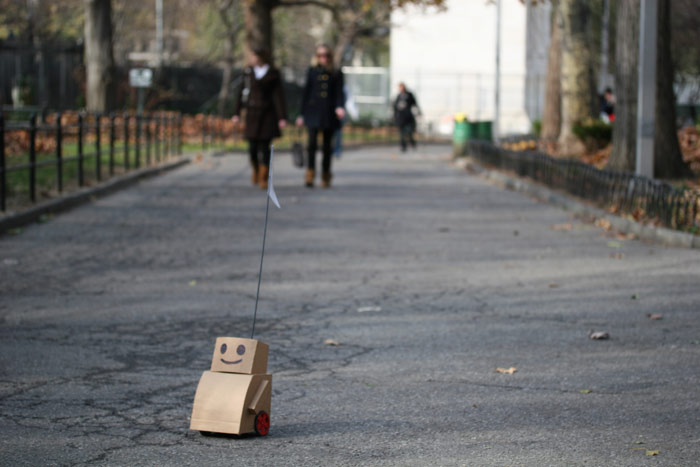
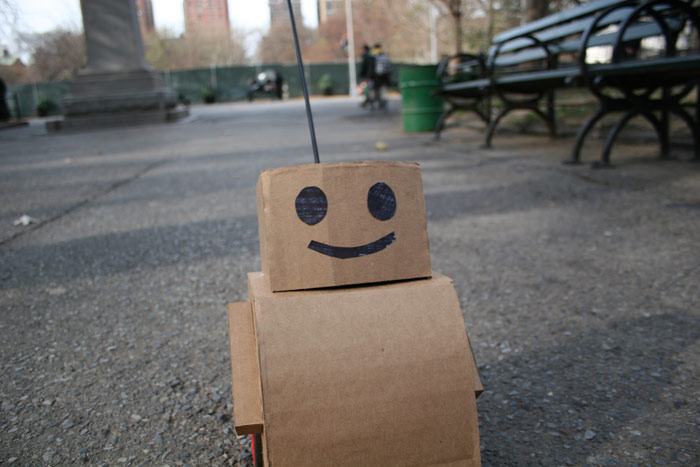
Now who could you say no to a face like that: Tweenbots is something that I wish we had a sister project of in Seattle. Kacie Kinzer of the Tisch School of the Arts at NYU did/ is doing a project on people's interaction with the pedestrian-level cityscape and is using the world's cutest cardboard robot to do it. This little guy can only roll straight ahead - if he's ever to get to his destination (written on a flag attached to his back), someone has to point him in the right direction. Literally.


Here's the best part - people actually do it. They see a little innocent cardboard box with only a motorized wheelbase and a smiley face to its name and say "Damn, that thing is adorable. Let's send it on its way."

Is this because we're programmed to love cute things so that we are convinced to put up with our young until they're old enough to take care of themselves? Is it because we pride ourselves in knowing our cityscape so much that we want to share this knowledge with others? Is it because we can empathize with vulnerability and being in situations where one cannot accomplish tasks by oneself? All of the above. It could also be because Kacie secretly placed a mind control ray in the robot and is testing it out under cover of a student art project. You never know.

Win quote from the artist herself:
The journey the Tweenbots take each time they are released in the city becomes a story of people's willingness to engage with a creature that mirrors human characteristics of vulnerability, of being lost, and of having intention without the means of achieving its goal alone. As each encounter with a helpful pedestrian takes the robot one step closer to attaining its destination, the significance of our random discoveries and individual actions accumulates into a story about a vast space made small by an even smaller robot.

Thursday, June 25, 2009

Iran

I haven't said anything here about the uprising in Iran because, frankly, other bloggers are doing a much better job than I could ever do (Andrew Sullivan at The Atlantic is my favorite). Even more important than the bloggers are the Twitterers, the on-the-ground primary sources that supply immediate information that is often unavailable anywhere else. While the news is often raw and painful, it is still wonderful to see the refashioning of Twitter from something amusing and modestly useful to a necessary tool of the activist-on-the-street.

What made me think of writing today was Dan Savage's post about protesters armed only with rocks being shot at by the police. Since a US citizen sending armaments to the protesters would be a diplomatic faux-pas at best, I'm sending money to The Tehran Bureau instead. Andrew Sullivan and The Boston Globe have said good things about the one-woman-edited news site, plus they have a PayPal account and they're asking for donations.
(photo courtesy of daylife)

Wednesday, June 24, 2009

You don't need a yard to have a garden

The Right of Way/ Harvard Ave. Collective Garden just got some attention from the local blogs. I hope these articles motivate some more neighborhood green thumbs to repeat ROW's success, especially because it isn't terribly hard to get something like this started. ROW started with a Craigslist post in February and five months later we've got an abundance of salad greens with squash, potatoes, peas, etc. in the making.

You too can find a neglected parking strip or traffic circle, test the soil inexpensively (University of Massachusetts Lab, BTW), get some seeds and get started. The main challenge with ROW, and I think it will be the same with most guerilla gardens on the Hill, is watering during the summer. And this can be solved with a wagon and gallon milk jugs (or your strong shoulders, whichever you prefer).

Locavores, organic vegetable lovers, green thumbs - you do not need a yard to have a garden. Start your guerilla/victory garden today.


Friday, June 19, 2009

Attention DIY and Artist Types: Salvagepunk

China Mieville should blog more often. Among the "five movements to watch out for" in his post, the one below is my favorite (then again, I'm a sucker for the bridge scenes in William Gibson's Virtual Light) . I hope to see plenty of it soon in our own fair city.


v) Salvagepunk

As Steampunk wheezes and clanks exhausted into the buffers, dragging an increasingly huge load of books behind it, the hunt for the next great somethingpunk is over. The orgy of para-Victoriana has been impressively tenacious, but it has its limits, and rather than yet another reclamation of an earlier mode of production--steam, dust, stone, diesel--the punk aesthetic of DIY, cobbling-together, contrariness, discordance and disrespect for the past will go meta. It will investigate not imaginary branchline points in a timeline (an understandable if rather plaintive discomfort with the idea that such a line was actually teleological, and ended with this bloody mess) but history itself as always-already a bricolage, and what we do about that.

Though this might look like apocalypse fiction, it will in fact be not about any implied catastrophe, but about scobbing together of culture from the refuse (and implying that all culture is and always has been so scobbed). An art of making-do, tool-use and ingenuity. A fiction infused with a militant amnesiac uninterest about cultural memes' origins and 'pure' 'original' 'purposes' - which chimeras its adherents will derisively and polysemically render 'pUr(e)poses' - this will be literature that celebrates reclamation, and/but forgets that prefix 're-': so, clamation fiction, ignoring the fact that ruins are ruined, were ever anything else.

If Benjamin warns that history is a buffeted angel staring at a giant pile of debris, Salvagepunk ignores the angel and roots around in the debris looking for a car to hotwire.

Salvagepunk is the most developed of these schools so far: its bards and theorists already exist, and have brilliantly started the job of delineating its contours, and making notes for a manifesto. More than any other of these incipient movements, it will have a recent history of precursors on which to draw, Salvagepunk avant la lettre. These influences include the Mad Max films, The Bed Sitting Room, Charles Platt's Garbage World, Steptoe and Son and the entire musical history of sampling, at all.

What to say: 'All art is an act of radical forgetting.'

What not to say: 'You finally did it! Damn you all to hell!'

Monday, June 1, 2009

"Trust Women"

What I learned at tonight's candlelight vigil at Cal Anderson Park for slain abortion physician George Tiller:

Dr. Tiller was a really nice guy. A gentle, caring man who would put in hours of personal time with patients. He wasn't there to do a procedure and then send the women on their way - he'd sit with them, talk with them, and hold them while they cried while they made one of the most difficult decisions of their lives.

He helped women who had found out late in their pregnancies that their baby had a fatal disease or disorder or that late in their term, their own life was at risk. He helped little girls who had been raped and had hidden their pregnancies until they were too far along to have abortions in most states. All these women travelled far and braved hostile crowds to make a very hard decision; Dr. Tiller was there to help them and provide a haven.

He didn't start out doing abortions. When he took over his father's practice (after his parent's died in a plane crash), women would come to him and ask if he could do the procedure "like his father did". He said yes, and then ended up taking this on as a full-time practice. He did this for thirty-some years while being endlessly threatened and harassed by pro-lifers who thought of him as an evil babykiller.

He wanted to retire when he was sixty. When he was asked why he didn't retire, he said he couldn't leave the women. Now that he's gone, there's hardly anywhere for them to go - maybe two other doctors in the U.S. do late-term abortions, because of the technical and emotional difficulty of the procedure, because of restrictive state laws, and because of violent crowds that are all too willing to harass and even kill late-term abortion physicians. Who will help these women now?

++++++++++++++++++++++++++++++++++++++++++++++++++++++++

For much better articles about George Tiller than this one, see In Memory of Dr. George Tiller, Kansas Stories and Where Will Women Go Now?. Thanks to Erica Barnett for posting about the candlelight vigil - I'm sure she did a great deal to contribute to the 100+ crowd that made it to the event on very short notice.

Thursday, May 28, 2009

SIFF Reviews: Short in the Dark and Dead Snow

Instead of virtuously attending the 12th Ave Stewardship Council meeting last night like I meant to, I was gang-pressed into taking in a SIFF double-feature: Short in the Dark at the Northwest Film Forum and Dead Snow at Pacific Place.

I just barely made it into Dead Snow, even with friends waiting for me in the Will Call line way ahead of time. Seattle likes their foreign, friends-go-to-an-isolated-cabin zombie films that much. We were not disappointed, though the short film that accompanied Dead Snow might have been better than the feature we came to see.

Full Employment is a German short about an employment assistance agency for the elderly who still need to make money but aren't getting around so well anymore. It's full of mockumentary goodness and jokes about how all young people in Germany are unpaid trainees or volunteers. And the best part: Mr. Jones, the elderly man who's day we get to follow...is a zombie hunter.

Short in the Dark is a series of experimental short films, some of which were really great, others of which were...definitely experiments.

  1. SHU (dir. Philipp Lachenmann, 12 min.)
    12 minutes of time-lapse filming watching night fall over an isolated high-security prison in the Mojave Desert. Mostly, you just hear the wind. It is quiet and beautiful. It is frightening to stare into the vast clear vault of the desert sky as it turns to night.

  2. Puccini Conservato (dir. Michael Snow, 10 min.)
    Oh man... ten minutes of fuzzy closeup pans of someone's Panasonic stereo system as Puccini plays in the background. It was so bad. The sudden, silent cuts to a fireplace, flowers, and open water were so unexpected and bizarre that the threater burst into laughter.

  3. Garden/ing (dir. Eriko Sonoda, 6 minutes)
    The whole short is a constant loop around a glass door that looks into a garden. The viewer seems to be approaching the door, only to go through it and see that they're looking at the same door again, somewhat like an inescapable revolving door that just keeps dumping one back into the lobby over and over again. Over time, the view of the garden through the door switches from the "real" view to a projection of that view to the entire screen being a projection of the "real" view of the room and the view. It was a fascinating study, although the constant circling motion made me rather queasy.

  4. Dig (dir. Robert Todd, 2 min.)
    A seizure-inducing series of signs painted on the street to guide road construction is accompanied by the sound of jackhammers. It works - it does indeed "[reveal] a restless array of mysterious geometries". Thankfully however, it was kept to two minutes so that the audience did not succumb to seizures or sensory overload.

  5. Slow Boat to Thassos (dir. Jon Behrens, 7 min.)
    Speaking of seizure-inducing... seven minutes of rapid-fire reverse colored photographic images with weird-ass noise in the background. This film would be perfect for brainwashing and hypnotic suggestion.

  6. Horizontal Boundaries (dir. Pat O'Neill, 23 min.)
    This one nearly killed me. It certainly brought back ten-fold the queasy feeling I got from Garden/ing. It was supposed to be some kind of statement about LA's cityscape, since all the images used in this unending brainkill were of that particular metropolis. What it was was an eternity of vertically overlapping images of the city accompanied by a mind-breaking soundscape of music/noise/old radio plays/dogs barking. I would be interested in 2-5 minutes of this. I could stand 2-5 minutes of this. But after nearly half an hour I was surprised I didn't have a migraine from my body's rebellion against the aesthetics of the piece.

  7. Somewhere (dir. Salise Hughes, 4 min.)
    Roy Rogers and Maria from West Side Story, cut directly from their native film stock and pasted onto a brightly colored backdrop, sing "Somewhere". Clunky and meh.

  8. Adulte (dir. Carlos Reygadas, 7 min.)
    Very, um, experimental. It certainly was surreal watching a naked man sitting in a coffin, lamenting, rolling himself and the coffin to the cliff, and then throwing the coffin over the edge while wearing a (miraculously self-attiring?) suit.

  9. Bedtime Story (dir. Sarah Jane Lapp, 2 min.)
    It's great, mostly because its a cute little story with a plot.

  10. The Chronicles of Cleo and Jack (dir. Karn Junkinsmith, 15 min.)
    Hands-down, this is what made Short in the Dark worth my while. Well, and SHU too. Two young hipsters skateboard all around Seattle trying to deliver a package and get away from Hari-Krishna types that dance like the hippies in Hair. It's lovely in black and white, and Karn Junkinsmith is right - skateboarding is like dancing, at least when she films it.

Monday, March 16, 2009

Rising Unemployment = Rising Volunteerism

I saw it in the New York Times, and then the Puget Sound Business Journal - rising unemployment has created a bumper crop of volunteers for nonprofits all over the nation (well, on both coasts anyway). Obama's call to service helped things along too - thank you El Presidente. I imagine once jobs start coming back, volunteer hours will drop, but I hope that everyone's time pitching in will stay with them for awhile. Maybe they'll get a taste for working less too.

Thursday, February 19, 2009

Why we should all work part-time

I really enjoy working 30 hours a week. I still get benefits, a regular schedule, and interesting responsibilities at my place of work. I do lose ten hours worth of money a week, but in return, I get ten more hours to do whatever the hell I want.

These days a lot of that time is taken up with community organizing (that $150K isn't going to raise itself), but when it's not I get to take naps, garden, and generally toodle around the Hill. Working part-time serves my health, my sanity, and the community to boot.

I get crap every so often from friends/relatives who think that I need to grow up and get a "real" job, i.e. work 40 hour a week. Personally, I think the schedule I have now is pretty adult - I make plenty of money to take care of myself financially and I have the time to do neat things like meet with city councilmembers about finding funding for John and Summit. On top of all that, I might also be saving the planet at the same time, according to this article at WorldChanging.

It might be particularly evil to write this post on a nice sunny day, but so be it. Sometimes you have to be a sneaky ninja to save the planet.

P.S.- If we all worked part-time, there would be more jobs. Let's say everyone at Corporation A goes from working 40-50 hours a week to working 30-35 hours a week. Assuming Corp. A gets the same work load, they'd have to hire more people to take up the hours. More jobs and more free time :D.

But let's assume that all these part-timers still got full benefits - wouldn't that make the "part-time scenario" prohibitively expensive for Corporation A? Possibly. But I keep hearing that workers tend to be more efficient when they work a six hour shift rather than an eight hour shift. Maybe that efficiency would translate into enough money to cover all the extra benefits that Corporation A now has to pay up for.

Tuesday, February 10, 2009

Gregoire gives 56 boards and commissions the axe, wants to cut over 100 more

I found this story thanks to The Seattle Courant. It's great that Gregoire is finding new ways to balance the budget, but after a look at the list of doomed boards and commissions, I'm not so sure how I feel about this move. Out of 192 boards and commissions that will be eliminated, are scheduled to be eliminated on 6/30/2010, or are under review to possibly be eliminated:
  • 31 are environmentally oriented
  • 39 are for Public Health
  • 14 are Special Needs or Disabilities focused
  • 18 are focused on Education
  • 7 are for Families and/or Children and
  • 22 are concerned with Public Safety or Justice (The counts and the headings are my own)

I really don't know what this means for public health or the environment in the State of Washington or any of the other subjects I've listed. Maybe all these commissions are as useless as the governor says they are and they should be cut. If not, we're going to lose a lot of useful information on education, special needs and disabilities, etc. that could have informed decision-makers in Olympia.

Do you have any idea what the consequences will be, if any? Give me a holler in the comments.

Monday, February 2, 2009

Write-in Candidate

Capitol Hill currency, after a fashion, has officially debuted on the Capitol Hill Community Council Wiki and CHS blog.

How it works: Cap Hill notes would act as 10% coupons at participating businesses: all a biz would have to do is post a bill in the window to advertise that they accepted the discount. Anyone could reproduce the bills, so local stores and restaurants and organizations could make them to bring business to the Hill.

Simple, local, self-replicating. What more do you need? An iconic image to put on the bill.

CHS blog has put it out for a vote, but I think the options presented are only so-so. So here's my suggestion for a write-in candidate: the Black Sun Sculpture in Volunteer Park. Otherwise known as the Volunteer Park Donut. Added bonus: if you have the right angle on a good day, you can get the Space Needle and the Olympics in the same shot (see above, thank you Traveler-Photo Digital)

The picture above is just to give you an idea of what Black Sun could look like on our Cap Hill notes: elegant, timeless, symbolic of the neighborhood.

Thursday, January 29, 2009

Things I saw on The Slog

A roundup's roundup.